AI Automation And Operations

We build intelligent workflow automation aligned to your governance standards, connected to your current systems, and ensure long-term operational visibility.


Our AI-driven automation services expand what you can automate:

Everything you need to build, run, and improve digital systems with clear scope, strong engineering, and long-term support.

Our Approach

We treat operations like a product, not a one-time automation project.

1. Define Outcomes

We align automation with clear business objectives such as cycle time reduction, cost savings, or improved SLA performance.

2. Instrument Workflows

We map and measure workflows across systems to identify bottlenecks, inefficiencies, and risk points.
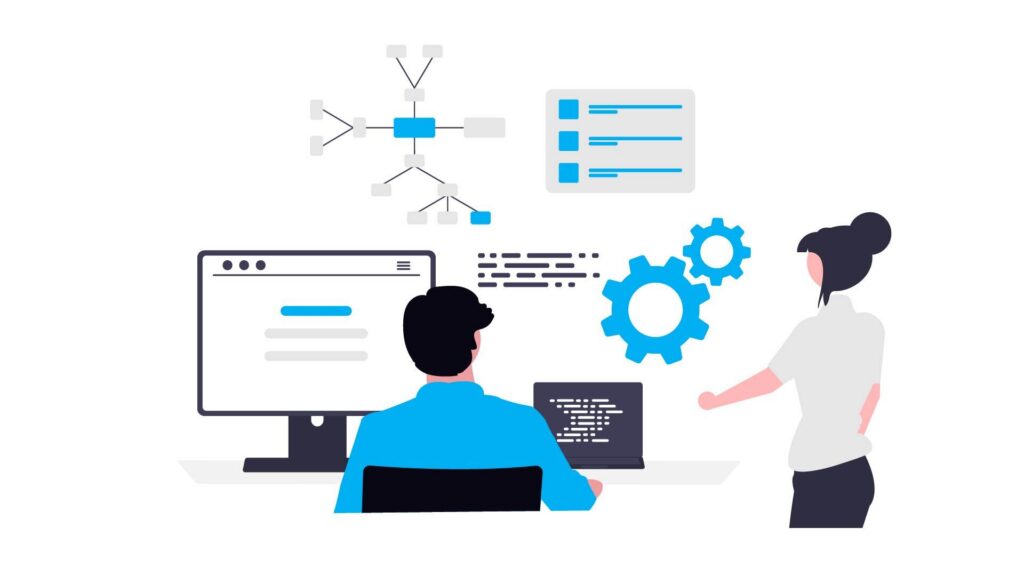
3. Deploy AI Automation

We embed AI into processes to automate repetitive tasks, improve decision support, and streamline system-to-system communication.

4. Optimize Continuously

Automation becomes a managed capability. We monitor, refine, and improve workflows as systems and business needs evolve.
Areas Where We Can Deliver Your Biggest Operational Gains

What We Deliver

AI Automation & Intelligent Workflows

We design intelligent workflows that scale across departments without disrupting how your teams work.

What We Deliver
  • Clean, connected data across systems
  • Role-based access controls and compliance guardrails
  • Human-in-the-loop checkpoints for high-impact decisions
  • Standardized intake, routing, and approval flows

CRM & ERP AI Integrations

We connect CRM, ERP, finance, service, and inventory systems to create a single source of truth for your business

How We Improve Data Reliability
  • Sync customer, product, and financial data across platforms
  • Align quoting, inventory, and billing processes
  • Connect service cases with contracts and entitlements
  • Use AI to detect mismatches and anomalies automatically

Proposal & Process Automation

HNR Tech uses AI-driven process automation to compress the quote-to-cash cycle while maintaining compliance and control.

What We Automate
  • Structured intake forms for consistent requirements and clause validation checks
  • AI-assisted scoping summaries from notes and emails
  • Pricing inputs pulled from approved catalogs
  • Proposal draft generation aligned to brand standards

Cross-System AI Integrations

We deliver cross-system AI integrations that remove friction between your tools and eliminate costly manual handoffs

How Our Event-Driven Integrations Help
  • Trigger delivery readiness workflows when deal stages update
  • Automatically generate tickets when invoice exceptions occur
  • Alert the correct teams when high-priority cases are created
  • Launch incident response workflows when system thresholds are exceeded

Frequently Asked Questions About AI Automation & Operations

AI automation and operations combine process design, systems integration, and applied AI to move operational work faster with fewer errors. It reduces cross-tool friction (emails to tickets to CRM/ERP), shortens cycle times, and improves visibility while keeping governance intact through validation, approvals, auditing, and escalation paths.

Traditional automation is rules-based and works best with structured inputs and predictable paths. AI automation can also handle unstructured data (emails, PDFs, notes), make probabilistic decisions (classification and prioritization), and power natural-language assistants. Strong process clarity still matters, so guardrails like approvals and audits keep outcomes consistent.

The biggest wins typically come from high-volume work with repeatable intent and heavy switching across tools. Common examples include service desk triage, finance invoice exceptions, sales ops CRM hygiene, supply-chain status checks, and customer support summarization and routing. The goal is removing busywork, not automating everything.

When CRM and ERP disagree, teams waste time translating, re-entering data, and correcting reports. CRM & ERP AI integrations sync definitions and events across systems, reduce duplicate entry, and improve data quality with validation and anomaly detection. A more reliable “source of truth” makes automation trustworthy and scalable.

Enterprise AI automation and operations should be built with governance from day one: role-based access control, least-privilege design, data-handling rules, audit logs, and model/prompt guardrails. For high-impact steps, human-in-the-loop reviews and clear escalation paths help prevent untraceable risk and support compliance.

Prioritize use cases by volume, complexity, risk, and value, then define success metrics up front—like reduced handling time, fewer manual touches, lower exception rates, and faster approval turnaround or quote-to-cash cycles. Favor partners who can integrate with your stack, test edge cases, and optimize continuously post-launch.

Get Free Consultation

Share a quick overview. We’ll respond with clear next steps, scope options, and the best-fit engagement model.


AI Engineering & Development FAQs

AI engineering and development services turn AI tools into secure, production-grade systems that integrate with your software, data, and workflows. They combine AI-enhanced software development, custom AI solutions, LLM development, generative AI, and AI agents/Copilots to deliver measurable business outcomes instead of isolated demos or experiments.

These services focus on the gap between promising prototypes and systems people trust daily. They integrate models with your data and security controls, design architectures for real-world load, embed AI into existing apps, and continuously monitor quality, cost, and performance so pilots become reliable, scalable production workflows.

Custom AI solutions and LLM development can power domain-specific assistants, knowledge copilots, intelligent search, natural-language interfaces to ERPs, automated document workflows, and analytics copilots. They’re designed around your processes, data flows, and decision points, using techniques like fine-tuning and retrieval-augmented generation to reflect how your organization actually works.

Enterprise AI systems are engineered with explicit guardrails: role-based access, data segregation, content filters, PII detection, and redaction. AI engineering and development services also add audit trails for prompts and responses, policy-driven controls aligned with legal and risk teams, and clear guidelines for human oversight and ongoing review.

Build in-house if you have a budget for specialized talent, strong MLOps and security capabilities, and time to experiment. Partner with an AI engineering firm when you need faster time-to-value, proven patterns for governance and scalability, and cross-functional expertise spanning data, backend, DevOps, and production AI operations.

Timelines vary by scope, but many projects follow three phases: 2–4 weeks of discovery and use-case prioritization, 4–8 weeks of rapid prototyping and iteration with real data, then staged production rollout over 4–12 weeks with monitoring, optimization, and extension to additional teams or workflows.